
Describe How Exercise Can Positively Affect Your Environmental Health
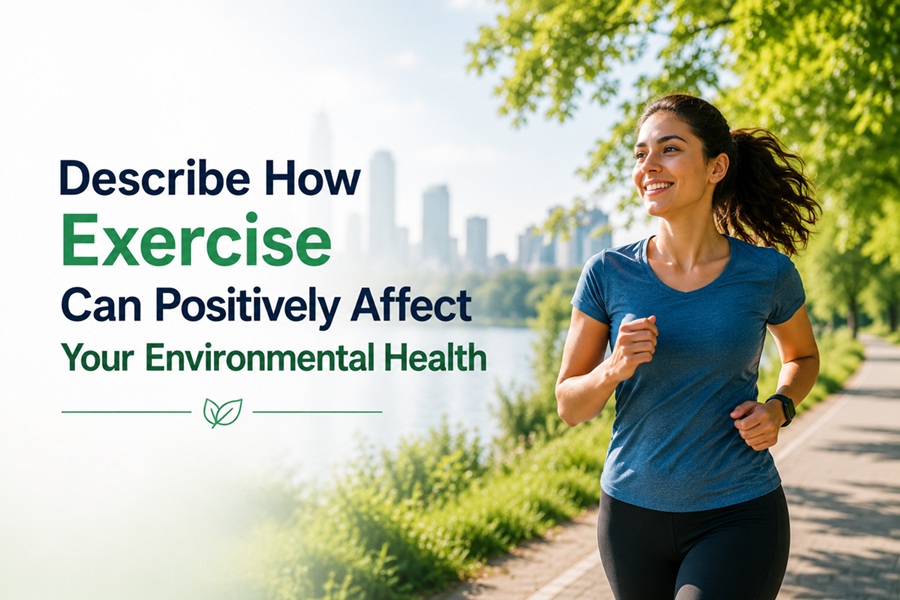
Exercise can positively affect your environmental health in two connected ways. First, choosing active forms of transport like walking and cycling instead of driving reduces the air pollution, carbon emissions, and noise you contribute to your surroundings. Second, spending time exercising outdoors builds a personal connection to natural spaces, which tends to make people more likely to protect and care for the environment around them. In other words, the way you move can lower your environmental impact while strengthening the bond that motivates you to keep those spaces healthy.
It helps to define the term first. Environmental health is the branch of health concerned with how your surroundings, the air, water, noise, and green spaces, affect human wellbeing. So when we ask how exercise affects your environmental health, we are really asking how physical activity shapes the quality of the environment you live in and share with others.
| Way Exercise Helps | Environmental Benefit |
| Walking or cycling instead of driving | Less air pollution and lower carbon emissions |
| Active commuting | Reduced traffic congestion and noise |
| Outdoor exercise | Stronger personal connection to nature |
| Choosing local parks and trails | Greater community value placed on green spaces |
| Lower reliance on cars | Improved local air quality for everyone |
| Group and community activity | Shared investment in maintaining clean spaces |
Active Transport Cuts Pollution
The clearest link between exercise and environmental health runs through transportation. Cars are a major source of air pollution and greenhouse gas emissions in most communities.
When you replace a short car trip with a walk or a bike ride, you remove those emissions entirely for that journey. Multiply that across many people and many trips, and the effect on local air quality becomes real.
Cleaner air is not an abstract benefit. Poor air quality contributes to asthma, heart disease, and other conditions. By choosing active transport, you help lower the pollution that harms your own respiratory health and that of your neighbors.
Less Traffic, Less Noise
Environmental health includes more than air. Noise pollution affects sleep, stress levels, and overall wellbeing, and traffic is one of its biggest sources.
Every person who walks or cycles instead of driving helps create quieter, less congested streets. Fewer cars mean less engine noise, fewer jams, and a calmer environment for an entire neighborhood.
This shows how a personal choice ripples outward. The decision to bike to work improves not only your fitness but the shared soundscape of your community.
Outdoor Exercise Builds a Connection to Nature
The second major link is psychological rather than mechanical. People who exercise outdoors, in parks, on trails, along green paths, tend to develop a stronger attachment to those natural spaces.
That attachment matters because people protect what they value. Someone who runs in a local park every morning is far more likely to support keeping that park clean, funded, and preserved.
This creates a positive cycle. Outdoor activity builds appreciation for green space, appreciation drives protection of that space, and well-kept green spaces then invite more people to exercise outdoors.
The Two-Way Benefit
One of the most useful things to understand is that this relationship runs in both directions.
Exercise improves environmental health by cutting pollution and building stewardship. At the same time, a healthy environment makes exercise easier and more appealing. Clean air makes outdoor activity safer. Accessible parks and trails give people places to move. Quiet, green neighborhoods invite walking and cycling.
| Direction | Effect |
| Exercise to environment | Less pollution, more stewardship of green spaces |
| Environment to exercise | Clean air and green space make activity easier |
This means personal fitness and environmental health support each other. Investing in one tends to strengthen the other.
How Physical Activity Fits the Bigger Picture
Exercise is one of the clearest examples of how the different parts of your wellbeing connect. Physical activity does not only serve your body; it touches your mental state, your community ties, and your surroundings all at once. If you want to see how these pieces fit together, our overview of how the components of health are related to wellness explains the wider connection.
Indoor vs Outdoor Exercise: Does It Matter for the Environment?
Both indoor and outdoor exercise are good for your body, but they carry different environmental weights worth considering.
Outdoor exercise like running, walking, or cycling generally has a very low environmental cost. It needs no electricity, no equipment manufacturing, and no climate control. It also delivers the connection-to-nature benefit that indoor workouts cannot.
Indoor exercise at a gym is not harmful, but it does carry a footprint. Treadmills and machines draw power, and large facilities use energy for lighting, heating, and cooling. None of this means you should abandon the gym, especially in extreme weather. It simply means that choosing outdoor activity when conditions allow is often the lower-impact option.
| Exercise Setting | Environmental Consideration |
| Outdoor (walk, run, cycle) | Very low footprint, adds nature connection |
| Home workouts | Low footprint, minimal equipment or power |
| Gym or fitness center | Higher footprint from equipment and climate control |
Beyond Transport: Other Ripple Effects
The transport link is the clearest one, but active, healthy living touches the environment in quieter ways too.
People who stay physically active tend to place fewer demands on the healthcare system over time. That matters environmentally because healthcare itself has a significant footprint, from energy-hungry facilities to medical waste and pharmaceutical production. Habits that keep people healthier can, in a small way, ease that load.
Active lifestyles also tend to pair with other low-impact choices. Someone who values fresh air and open trails is often more mindful about littering, water use, and supporting local green initiatives. None of this is automatic, but the connection between caring for your body and caring for your surroundings is a real and reinforcing one.
A Community Effect, Not Just a Personal One
It is worth stressing that these benefits scale. One person cycling to work barely changes a city. Thousands of people doing it changes the air quality of an entire region.
This is why active transport is a community and public health issue, not only a personal fitness choice. When neighborhoods build safe sidewalks, bike lanes, and accessible parks, they make the low-impact choice the easy choice. Using those spaces, in turn, signals that they are valued and worth maintaining.
Simple Ways to Put This Into Practice
You do not need to overhaul your life to see the benefit. A few practical shifts add up.
Walk or cycle for short trips instead of driving whenever it is safe and reasonable. Choose outdoor exercise in local parks or on trails rather than always heading indoors. Use active options for part of your commute, even if you cannot cover the whole distance. Support and use community green spaces, since using them helps keep them valued and maintained.
Each of these choices is small on its own. Together, and repeated over time, they lower your environmental footprint and deepen your stake in a healthy environment.
Frequently Asked Questions
Does exercising outdoors really reduce pollution?
Indirectly, yes. The reduction comes mainly from how you get there and how you replace car trips. Choosing to walk or cycle instead of driving removes vehicle emissions for those journeys, which is where the biggest environmental gain lies.
Can exercise harm the environment?
Most everyday exercise has little to no negative impact. The main footprint comes from energy-intensive gym equipment, single-use plastic water bottles, and driving long distances to work out. Simple swaps, like a reusable bottle and a closer route, keep the impact low.
What is the single most effective change I can make?
Replacing short car trips with walking or cycling. Short trips produce a surprising share of urban emissions, so shifting them to active transport delivers both a fitness gain and a clear environmental benefit.
Do I need access to nature to get the environmental benefit?
Not necessarily. Even in a dense city, choosing to walk between errands, taking the stairs, or cycling a commute reduces your footprint. Access to parks and trails deepens the connection-to-nature effect, but the pollution and noise benefits come simply from moving under your own power instead of driving.
Is walking or cycling realistic in bad weather?
Not always, and that is fine. The goal is not to force active transport in every condition but to choose it when it is safe and practical. Even shifting a portion of your trips, on the days that allow it, adds up over a year into a meaningful reduction.
Final Thoughts
Exercise affects your environmental health through a simple but powerful loop. Active choices like walking and cycling cut the pollution and noise you add to your surroundings, while outdoor activity builds the connection that makes you want to protect natural spaces.
The takeaway is encouraging. Moving your body is already good for your heart, your muscles, and your mind. It turns out the same choices can be good for the air, the streets, and the green spaces you share with everyone around you.