
Blood Clot and Tingling Sensation in the Head or Scalp: What It Really Means
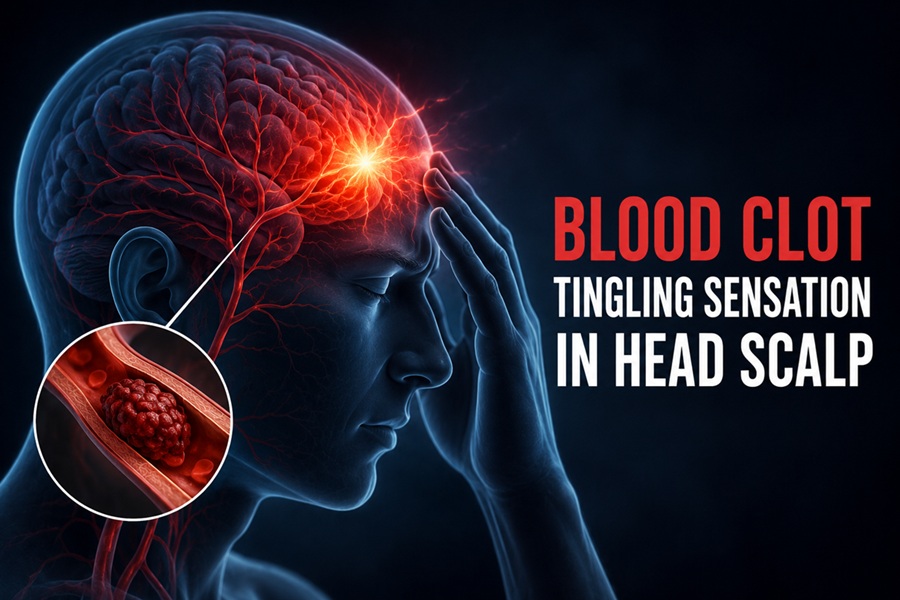
A tingling sensation in your head or scalp on its own is very unlikely to be a blood clot. This is the direct answer, and it matters because a lot of content online implies otherwise. Isolated scalp tingling is far more commonly caused by nerve irritation, tension, anxiety, migraine, skin conditions, or simply how you slept. A blood clot in the brain, medically called cerebral venous sinus thrombosis, is rare, affecting roughly 5 people in a million each year, and it does not typically announce itself with tingling alone.
That said, there is an important exception you need to know. When tingling or numbness appears alongside a severe or worsening headache, vision changes, weakness on one side of the body, slurred speech, seizures, or confusion, that combination is a medical emergency. Call 911 immediately. The danger is not the tingling by itself; it is tingling arriving in company with neurological symptoms.
| Question | Answer |
|---|---|
| Is scalp tingling alone a clot sign? | Very unlikely |
| What is a brain clot called? | Cerebral venous sinus thrombosis (CVST) |
| How rare is it? | About 5 per million people per year |
| Most common CVST symptom | Severe, worsening headache (around 90%) |
| Does CVST cause tingling? | Sometimes, but with other neurological symptoms |
| Common causes of scalp tingling | Nerve irritation, tension, migraine, anxiety, skin issues |
| Emergency signs | Severe headache plus vision, speech, weakness, or seizure |
| What to do in an emergency | Call 911, do not drive yourself |
Why This Search Deserves a Straight Answer
If you are searching this, you likely felt something odd on your scalp and a worried thought followed. That is a reasonable instinct, and it deserves a real answer rather than vague hedging.
The honest answer has two halves. Scalp tingling by itself is common and usually harmless. But the specific pattern of tingling plus other neurological symptoms is one you should never sit on. Knowing which is which is the single most useful thing this article can give you.
What Actually Causes Tingling in the Head and Scalp
Most scalp tingling traces back to nerves, muscles, or skin rather than blood vessels.
Occipital neuralgia and nerve irritation. The nerves running from the neck over the scalp can become irritated by posture, tension, or compression, producing tingling, burning, or shooting sensations.
Tension and muscle tightness. Tight muscles in the neck and scalp are an extremely common cause of odd crawling or prickling sensations.
Migraine. Some migraines produce sensory aura, including tingling in the scalp or face, before or during the headache.
Anxiety and panic. Heightened stress responses genuinely cause paresthesia, the medical term for tingling, including in the head.
Skin conditions. Dandruff, seborrheic dermatitis, psoriasis, and allergic reactions to hair products commonly cause tingling and itching.
Sleeping position or pressure. Sustained pressure on a nerve, exactly like your foot falling asleep, can affect the scalp.
Nutrient deficiencies. Low B12 in particular can cause tingling anywhere in the body.
Shingles. Tingling and burning on one side of the scalp can precede a shingles rash by a few days.
Notice what is absent from that list: blood clots. They exist, but they sit far down the probability ladder for tingling alone.
What a Brain Blood Clot Actually Looks Like
Cerebral venous sinus thrombosis happens when a clot forms in the veins that drain blood from the brain. Blood backs up, pressure rises, and swelling or bleeding can follow. It is a form of stroke and needs emergency care.
Its actual symptom picture is quite different from isolated tingling:
Severe headache is by far the most common feature, present in around 90% of cases, and it characteristically keeps getting worse rather than easing.
Vision problems, including blurring or loss of vision.
Seizures, which occur in a large share of cases, roughly 40% or more.
Stroke-like deficits, such as one-sided weakness or numbness in the face, arm, or leg.
Speech difficulty, confusion, or reduced alertness.
Nausea and vomiting, often alongside the headache.
Tingling and numbness can be part of this, but published case reports describe it appearing with severe headaches and limb involvement, not as a lone scalp symptom. That is the crucial distinction.
The Pattern That Means Emergency
Use this table to separate the everyday from the urgent.
| Situation | What It Suggests |
|---|---|
| Mild scalp tingling, no other symptoms | Usually benign, monitor it |
| Tingling with itching or flaking | Likely a skin condition |
| Tingling with neck tension | Likely nerve or muscle related |
| Tingling with a mild recurring headache | Possibly migraine or tension |
| Tingling with severe, worsening headache | Emergency, call 911 |
| Tingling with vision loss or double vision | Emergency, call 911 |
| Numbness or weakness on one side | Emergency, call 911 |
| Slurred speech or confusion | Emergency, call 911 |
| Any seizure | Emergency, call 911 |
The rule of thumb is straightforward: tingling alone is rarely urgent, tingling plus anything neurological is always urgent.
Who Is at Higher Risk of a Brain Clot?
Certain factors raise CVST risk, and knowing yours changes how seriously to treat symptoms. Risk is higher with pregnancy and the weeks after childbirth, use of oral contraceptives, inherited clotting disorders such as thrombophilia, dehydration, head or neck infections, recent head trauma, cancer, and autoimmune conditions. It is also notably more common in women than men.
None of this means tingling equals a clot. It means that if you carry these risk factors and develop a severe headache with neurological symptoms, do not talk yourself out of seeking care.
Why Misdiagnosis Happens
One reason this condition gets discussed anxiously online is that it genuinely is hard to catch. Misdiagnosis rates for CVST have been estimated as high as 50%, largely because it is rare and its symptoms overlap with far more common problems like migraine and tension headaches.
The lesson from that statistic is not to self-diagnose more aggressively. It is to seek evaluation when symptoms are severe or unusual for you, and to describe the full picture to a doctor rather than just the headache.
What to Do About Ordinary Scalp Tingling
If your tingling is mild, isolated, and not accompanied by anything alarming, practical steps usually help. Address neck and shoulder tension with posture changes and stretching. Check whether a new shampoo or hair product coincided with the onset. Treat scalp skin conditions with appropriate products. Manage stress, since anxiety-driven tingling is genuinely common. If it persists for weeks, mention it at your next appointment, where a doctor can check for things like B12 deficiency or nerve involvement.
Common Questions
Can a blood clot cause tingling only in the scalp?
That would be very unusual. Brain clots typically produce severe headache and other neurological signs. Tingling as the sole symptom points strongly toward nerve, muscle, skin, or stress-related causes.
How can I tell a migraine aura from something serious?
Migraine aura usually builds gradually over minutes, lasts under an hour, and follows a pattern you may recognize from past episodes. Sudden onset, new symptoms you have never had, or symptoms that persist and worsen should be treated as an emergency.
Should I go to the ER for scalp tingling?
Not for tingling alone. Go immediately if it comes with severe or worsening headache, vision changes, weakness, speech difficulty, confusion, or a seizure.
What test finds a brain clot?
Imaging, specifically a CT scan or MRI, sometimes with venography to view the veins. It cannot be diagnosed by symptoms alone, which is why evaluation matters when the warning pattern appears.
Final Thoughts
A tingling sensation in the head or scalp is almost never a blood clot. It is far more likely to come from irritated nerves, tight muscles, migraine, anxiety, or your scalp skin. Brain clots are rare, and when they occur they announce themselves loudly, with a severe worsening headache and neurological symptoms, not with a quiet prickle.
Hold onto the distinction. If it is tingling alone, investigate calmly. If it is tingling with a crushing headache, vision loss, weakness, slurred speech, or a seizure, stop reading and call 911. Knowing the difference is what lets you avoid both unnecessary panic and dangerous delay.