Am I Having a Heart Attack? A Woman’s Guide to the Warning Signs
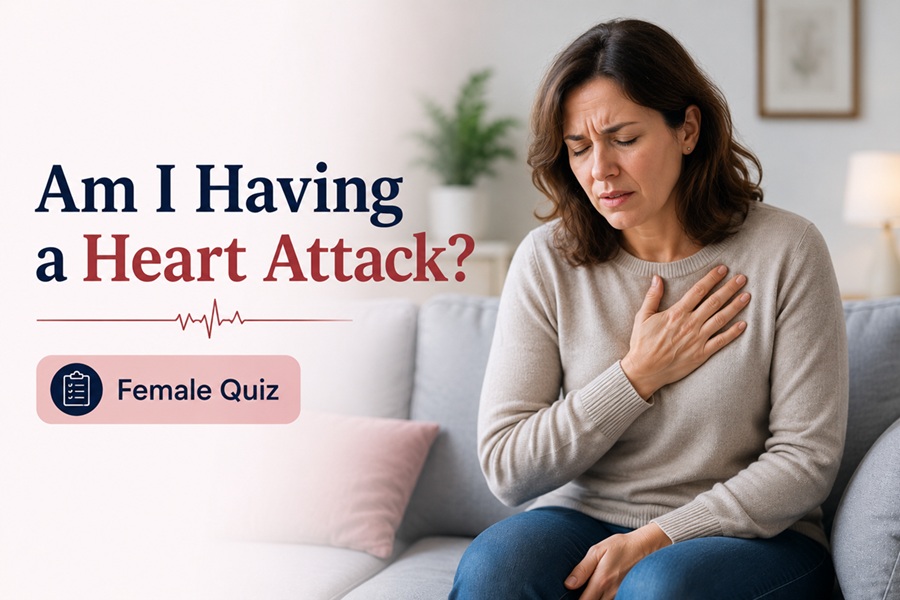
If you are asking this question right now and you have symptoms like chest discomfort, shortness of breath, unusual fatigue, nausea, or pain in your jaw, back, or arm, call 911 immediately. Do not wait, and do not drive yourself. No online quiz can confirm or rule out a heart attack, and the biggest danger for women is waiting too long because the symptoms did not seem “bad enough.” It is always better to have a false alarm than to ignore a real one.
The reason this matters so much for women is simple. Heart attack symptoms in women are often subtler and less recognized than the classic chest-clutching image most people picture. That difference leads many women to downplay what they are feeling, and that delay can cost heart muscle and lives. Heart disease is the leading cause of death for women in the United States, and about one in three deaths among women each year is linked to cardiovascular disease.
| Key Point | What to Know |
|---|---|
| Can a quiz diagnose a heart attack? | No. Only medical testing can confirm one |
| What should you do with warning signs? | Call 911 right away |
| Most common symptom in women | Chest pain or discomfort, but not always |
| Symptoms women often miss | Fatigue, nausea, jaw or back pain, breathlessness |
| Why women delay care | Symptoms feel subtle or get blamed on stress |
| Biggest risk of waiting | More heart damage, worse outcomes |
| Who is at higher risk | After menopause, diabetes, high blood pressure |
Why This Question Deserves a Serious Answer
Searching “am I having a heart attack” usually means something already feels wrong. That instinct is worth trusting. Women are more likely than men to talk themselves out of their symptoms, to blame them on anxiety, heartburn, tiredness, or hormones, and to keep going with their day.
Doctors are clear on this point. If something feels off or not right, do not wait to seek medical attention. The cost of a false alarm is a few hours and some embarrassment. The cost of ignoring a real heart attack can be permanent damage or death.
Heart Attack Warning Signs in Women
Chest pain is still the most common heart attack symptom in women, but it does not always feel like severe, crushing pain. It may be pressure, tightness, fullness, or a dull ache that comes and goes. And some women have no chest pain at all.
These are the warning signs women should take seriously:
Chest discomfort. Pressure, squeezing, fullness, or pain in the center or left side of the chest. It may be mild rather than dramatic.
Shortness of breath. Difficulty breathing, sometimes even while sitting still, with or without chest discomfort.
Unusual fatigue. A deep, sudden tiredness that rest does not fix, sometimes appearing days before other symptoms.
Nausea or vomiting. Feeling sick to your stomach, which is easy to mistake for a stomach bug.
Pain in the jaw, neck, back, or arm. Discomfort that spreads to these areas, often without obvious chest pain.
Dizziness or lightheadedness. A sudden sense of disorientation or feeling faint.
Cold sweat. Breaking out in a sweat for no clear reason.
Why Women’s Symptoms Are Missed So Often
There is a real, documented reason women’s heart attacks go unrecognized. For decades, the “classic” symptoms taught to the public reflected what men typically experience, so anything outside that pattern got labeled atypical.
Many cardiologists now avoid that word. Instead of calling women’s symptoms “atypical,” they call them “less recognized” or “underrecognized,” because there is nothing abnormal about them. They are simply different and less talked about.
This gap has consequences. Because women’s warning signs can be subtle or unexpected, they are often misread as stress, poor sleep, dehydration, or a hormonal issue, both by women themselves and sometimes by others. Women, on average, face delays in diagnosis and are less likely to receive timely treatment. Understanding these signs ahead of time is one of the most protective things a woman can do.
What to Do If You Think You Might Be Having One
If you have any of the warning signs above, take these steps.
Call 911 immediately. Emergency responders can begin care the moment they arrive, which matters enormously.
Do not drive yourself to the hospital. If your condition worsens on the way, you put yourself and others at risk.
Sit or lie down and stay as calm as you can while you wait for help.
If advised by emergency services and you are not allergic, chewing an aspirin can sometimes help, but only follow this if directed. Do not delay calling for help to look this up.
The phrase cardiologists repeat is “time is muscle.” The longer a heart attack goes untreated, the more of the heart is damaged. Fast action protects both.
Heart Attack vs Anxiety vs Heartburn
One reason women hesitate is that heart attack symptoms can overlap with less serious conditions. This table shows why guessing is risky, and why professional evaluation is the only reliable answer.
| Feeling | Could Be | Why You Still Shouldn’t Guess |
|---|---|---|
| Chest tightness with breathlessness | Anxiety or heart attack | The two can feel nearly identical |
| Burning in the chest | Heartburn or heart attack | Heart attacks can mimic indigestion |
| Nausea and fatigue | Stomach bug or heart attack | Women often have exactly this pattern |
| Jaw or back pain | Muscle strain or heart attack | Referred cardiac pain is easy to dismiss |
The takeaway is not to diagnose yourself. It is to recognize that these overlaps are precisely why a heart attack is so easy to miss, and why medical evaluation exists.
Risk Factors Women Should Know
Some risk factors carry more weight for women, and knowing yours helps you take symptoms seriously.
High blood pressure and diabetes raise heart disease risk more sharply in women than in men with the same conditions. Menopause matters too, since the drop in estrogen after menopause increases risk. Certain conditions unique to or more common in women, including some pregnancy complications, broken heart syndrome, and autoimmune diseases, also raise the odds. Depression, which is more common in women, is an additional recognized risk factor.
None of these guarantees a heart attack, and none rules one out. They simply mean that unusual symptoms deserve more attention, not less.
Common Questions
Can I really not tell on my own if it’s a heart attack?
Not reliably, and neither can any quiz or app. A heart attack is confirmed through an ECG and blood tests that measure specific cardiac markers. That is why the safe response to warning signs is always to seek emergency care rather than self-assess.
What if I call 911 and it turns out to be nothing?
That is a good outcome, not a wasted trip. Emergency doctors would far rather evaluate a false alarm than treat a heart attack that was ignored for hours. You have nothing to apologize for.
Do younger women need to worry about this?
Heart attacks are less common in younger women but not impossible, especially with risk factors like diabetes, high blood pressure, smoking, or certain pregnancy complications. Symptoms deserve the same seriousness at any age.
I get anxiety and it feels like this. How do I know the difference?
You often cannot tell them apart from feeling alone, which is exactly the problem. If symptoms are new, severe, or different from your usual anxiety, treat them as an emergency and get evaluated.
The Bottom Line
The honest answer to “am I having a heart attack” is that no article, quiz, or app can tell you. What this guide can do is help you recognize the warning signs that women too often overlook, and give you permission to act on them without second-guessing.
If your body is telling you something is wrong, listen to it. Call 911. Learning these signs before an emergency, and taking your own symptoms as seriously as you would a loved one’s, is one of the most important things you can do for your heart. For more on the long-term conditions that raise cardiovascular risk, see our guide to the most common chronic diseases in young adults.
This article is for general information and awareness only. It is not a diagnostic tool and is not a substitute for professional medical care. If you think you may be having a heart attack, call 911 or your local emergency number immediately.